84 disinfectant (sodium hypochlorite solution) is one of the most widely used sanitizers in hospitals, schools, food plants and public facilities. For importers and distributors, it is also a product with low entry barriers and intense price competition — which means supplier quality varies a lot. A bad batch with low available chlorine or poor stability can destroy your reputation in a tender market.
Based on our experience as a source factory exporting disinfectants, here are the 7 checkpoints professional buyers use to qualify an 84 disinfectant supplier in China.
1. Verify Available Chlorine Content — in Writing
The core specification of 84 disinfectant is available chlorine, typically 4.0%–7.0% for commercial concentrate. Ask the supplier to state the exact percentage on the quotation, the COA (Certificate of Analysis) and the product label — not just verbally. A reliable factory will also tell you the guaranteed chlorine level at the time of arrival, because sodium hypochlorite degrades during sea transport.
2. Ask About Stability, Not Just Strength
Sodium hypochlorite decomposes faster under heat and sunlight. A serious manufacturer controls stability through:
- Purified raw materials with low heavy-metal content (iron and nickel accelerate decomposition)
- Proper caustic alkalinity (excess NaOH kept in the right range to slow degradation)
- Opaque or UV-resistant packaging
Ask for a shelf-life statement (usually 6–12 months) and how chlorine loss is compensated for long sea voyages.
3. Check Certificates and Export Documents
For smooth customs clearance and tender bidding, your supplier should provide at minimum:
- MSDS / SDS in English
- COA for each production batch
- ISO 9001 quality management certification
- Certificate of Origin (CO) for duty preferences where applicable
- Dangerous goods documentation — note that 84 disinfectant above certain concentrations ships as Class 8 corrosive (UN 1791), so the factory must be experienced in DG cargo declaration
If a supplier hesitates on DG paperwork, they have probably never exported this product seriously.
4. Confirm It Is a Real Factory, Not a Trading Shell
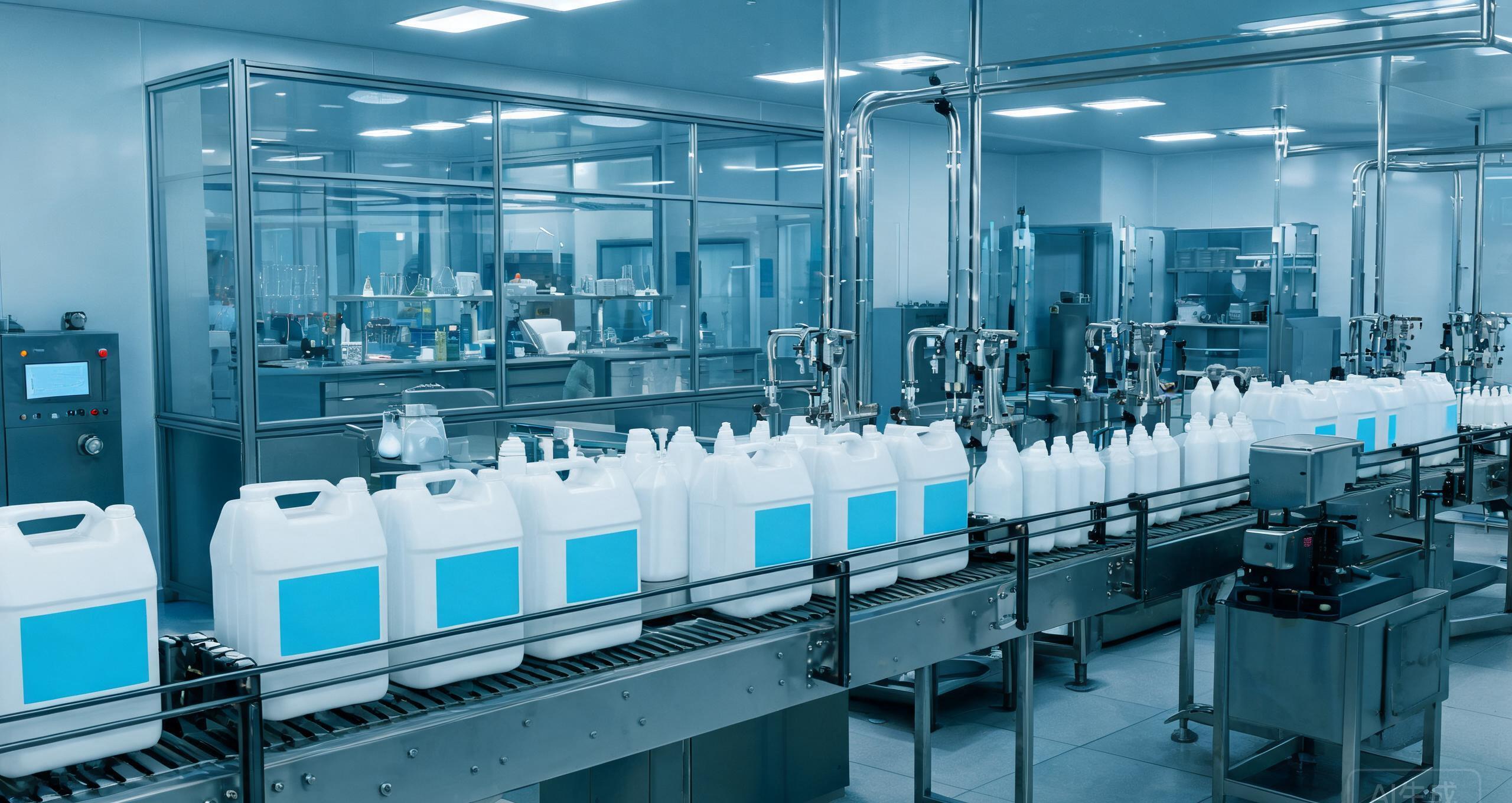
Trading companies are not necessarily bad, but for a commodity chemical the source factory gives you better pricing, batch consistency and faster customization. Simple verification: ask for a video call walking through the production line, request photos of the filling equipment and storage tanks, or check whether the company name on the business license matches the factory address.
5. Evaluate Packaging Options for Your Market
Different channels need different packaging:
- Retail: 500ml / 1L / 3.8L bottles with your private label
- Institutional & janitorial: 5L / 20L jerry cans
- Re-packing or industrial use: 25KG drums or IBC tanks
A supplier with in-house filling lines can switch between these formats without outsourcing — which keeps quality and lead time under control.
6. Test OEM/ODM Capability with Small Details
If you plan private label, look beyond "we support OEM". Check label material (waterproof PP vs. paper), bottle cap quality, whether they can adjust fragrance or thickeners, and whether they sign a formula confidentiality agreement. These details reveal whether the factory has real ODM depth.
7. Compare Response Speed and Professionalism
Send your RFQ with product spec, target quantity and packaging. A well-organized factory replies within 24 hours with a structured quotation: FOB/EXW price, packing details, loading quantity per container, lead time and available certificates. Slow or messy replies at the quotation stage usually mean slow and messy production later.
Work with a Source Factory
At Wolaimu Biotechnology, we manufacture 84 disinfectant on our own production lines in Dezhou, Shandong. We supply bulk drums and retail-ready bottles with OEM labeling, provide COA/MSDS/ISO documents with every order, and quote within 24 hours. See our 84 Disinfectant product page for specifications, or contact us for a factory-direct quotation.